
Tech
November 26, 2026
FCC approves SpaceX plan for up to 1 million data-center satellites, first due by 2033
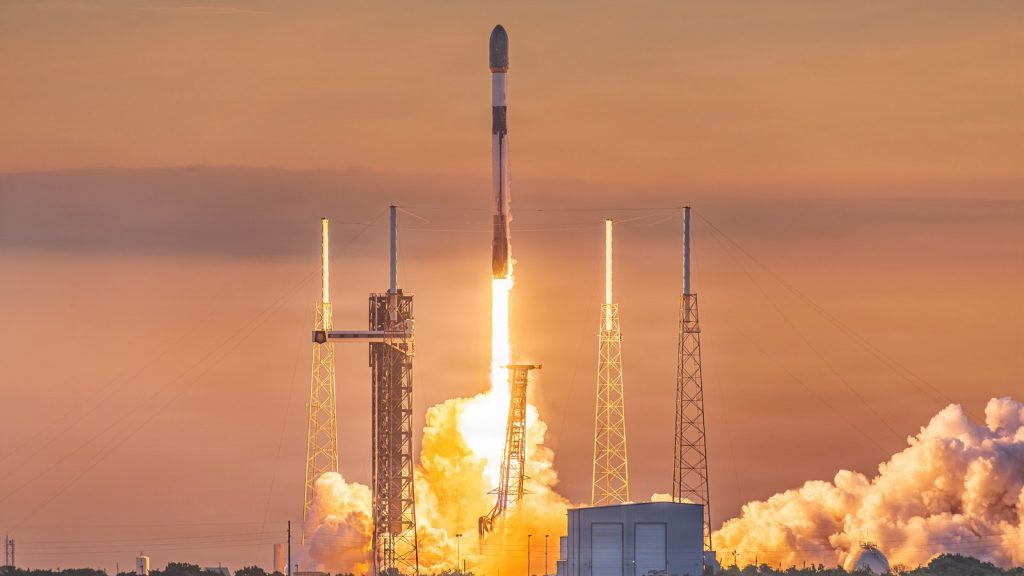
A Falcon 9 carrying 29 Starlink satellites lifts off from Cape Canaveral Space Force Station on July 5, 2026. Photo: U.S. Space Force photo by Gwendolyn Kurzen / Wikimedia Commons, public domain
The Federal Communications Commission has given SpaceX conditional permission to put up to 1 million satellites into low Earth orbit to work as data centers, a constellation the company calls Starmind. The order was signed Nov. 25 by Space Bureau Chief Courtney Reinhard. Reuters noted in its report on the approval that only about 17,000 satellites are in orbit today.
The approval does not mean a million computers are about to launch. The FCC’s memorandum opinion and order sets a long timeline, leaves a key debris question open and licenses only a narrow slice of radio spectrum for backup control.
What the FCC actually licensed
The FCC regulates radio transmissions, not computing, so the grant covers how SpaceX talks to the satellites from the ground. SpaceX told the agency that Starmind satellites will move data mainly by laser links to its existing Starlink network. The order authorizes Ka-band frequencies, 18.8 to 19.3 GHz down and 28.6 to 29.1 GHz up, only for backup and emergency telemetry, tracking and command if those optical links fail.
Even that use is on an “unprotected and non-interference basis.” If another operator documents harmful interference, the order says SpaceX must immediately stop the transmissions causing it and inform the commission in writing. SpaceX also has to coordinate with federal users of the upper band.
The satellites would fly in shells between 500 and 1,002 kilometers up, in 30-degree and sun-synchronous inclinations, according to the grant.
Seven years to launch one satellite
The license comes with deadlines. SpaceX must have one Starmind satellite in orbit and operating by Nov. 25, 2033. It must have 10% of the maximum, or 100,000 satellites, working by Nov. 25, 2035, half by 2038 and the full constellation by Nov. 25, 2040. Miss a milestone and the authorization becomes void. The FCC applied the newer milestone schedule it adopted in its July space-licensing overhaul, after SpaceX dropped an earlier request to waive milestones altogether.
The bureau did waive the surety bond that satellite operators normally post with the Treasury, accepting SpaceX’s argument that the bond makes little sense for spectrum used only as a fallback.
For scale, the Falcon 9 launch pictured with this story, in July from Cape Canaveral, carried 29 Starlink satellites.
The debris question is still open
The most important thing the FCC did not decide is what happens to Starmind satellites at the end of their lives. Its rules require satellites that finish their missions below 2,000 kilometers to reenter the atmosphere within five years. SpaceX asked for flexibility to send satellites operating above 600 kilometers into other Earth disposal orbits or into orbit around the sun.
The bureau said SpaceX had not given it enough information to judge those methods and deferred the waiver. Before deploying any Starmind satellite above 600 kilometers, SpaceX must file a modification application with a final debris plan. The order found the plan for satellites below 600 kilometers complies with current rules.
Objections from Amazon, Viasat and astronomers
Kuiper Systems, the Amazon unit that runs the Amazon Leo broadband network, Viasat and the American Astronomical Society each filed petitions to deny in March. The FCC rejected the argument that it should cap the number of satellites with similar orbits, saying it would not “invent a de facto rule” in a single licensing case.
It dismissed environmental and atmospheric objections, citing its October decision that space-based operations fall outside the National Environmental Policy Act, and called concerns about satellites burning up on reentry “speculative.” On astronomy, the bureau said SpaceX’s commitment to coordinate with the National Science Foundation was sufficient and that the grant had been coordinated through federal agencies including NASA and NOAA.
SpaceX is not the only company chasing computing in orbit. Google has already booked a Blue Origin New Glenn launch for its Project Suncatcher test in 2029, and Amazon Leo has been expanding its own spectrum holdings, including through the Globalstar deal the FCC cleared in October.
SpaceX has 30 days from the Nov. 25 release to decline the conditions; otherwise the grant takes effect as written. The next filing to watch is the debris modification application, which has to come before any satellite goes above 600 kilometers. More on satellites and spectrum is on our Tech page.
Add Verity News as a preferred source on Google (opens in a new tab)