
Tech
November 15, 2026
FCC says online marketplaces pulled 18 million listings for banned electronics in a year
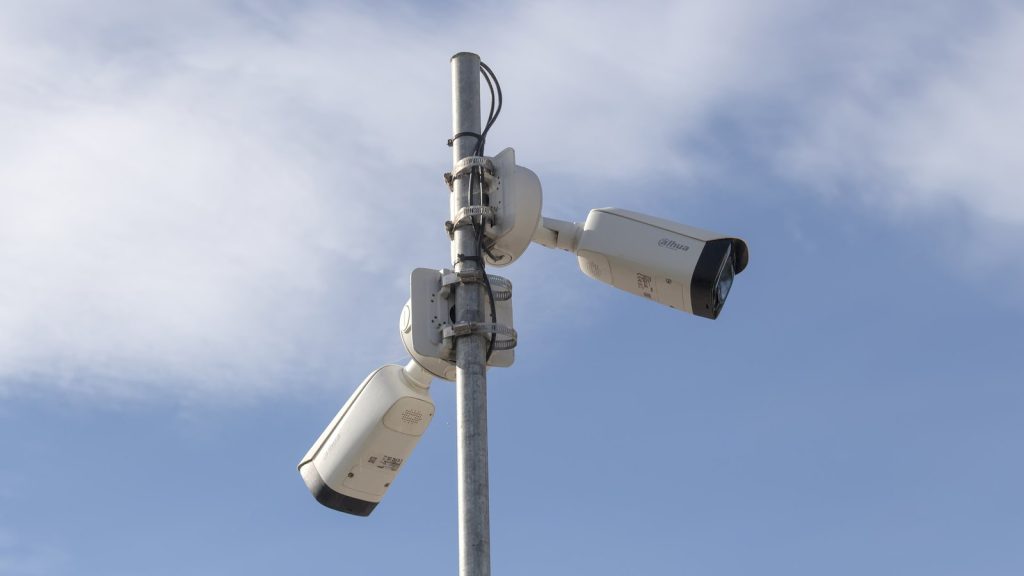
Dahua security cameras on a pole in Nottingham, England. Dahua video surveillance gear has been on the FCC Covered List since 2021. Photo: Aethonatic / Wikimedia Commons, CC0
Online marketplaces taking part in the Federal Communications Commission’s Operation Clean Carts have blocked or removed more than 18 million listings for electronics that can’t legally be sold in the U.S., the agency said Friday.
The figure covers the program’s first year. In a public notice released Nov. 13, the FCC’s Enforcement Bureau said some platforms also took their own action against more than 125,000 third-party sellers who tried to get around the platforms’ compliance checks. The notice does not name the marketplaces involved.
The numbers matter for anyone shopping for routers, security cameras, drones or other connected gear this holiday season. Federal law bars selling or marketing equipment on the FCC’s Covered List, and that ban applies to e-commerce sites as well as stores.
What is on the Covered List now
The Covered List started in March 2021 with telecom and video surveillance gear from Huawei, ZTE, Hytera, Hikvision and Dahua. Kaspersky security software followed. More recently it has widened from named companies to whole product categories: foreign-made drones and drone components, routers produced in foreign countries (added March 23, 2026), and foreign-produced advanced robotic devices and power inverters (added July 28, 2026).
Those category entries have exceptions. Products that receive a Conditional Approval from the Department of War or the Department of Homeland Security can still be sold, and the FCC keeps a running list of approved drones, routers, robots and inverters on the same page. The most recent drone approval on the list is dated Nov. 6.
That shift helps explain the size of the cleanup. A ban on one manufacturer’s cameras is easy to screen for by brand name. A ban on most foreign-made routers or drones, with a list of approved exceptions, is much harder for a marketplace to police at scale.
What the FCC wants marketplaces to do
Alongside the numbers, the bureau published a set of best practices it says participating platforms already use. They fall under three headings: automated detection, seller verification and monitoring after a product is listed.
- Smarter scanning. The FCC suggests using machine learning and large language models to read titles, descriptions, photos and reviews, so a “signal blocker” or “scrambler” listing gets caught even when it avoids the word “jammer.”
- Reading the label. Image recognition and text extraction can pull FCC IDs straight from product photos and flag pictures where an ID or brand name has been covered up or altered.
- Checking the ID. Platforms can validate FCC IDs against the agency’s equipment authorization records through an existing API. The FCC says its engineering office will issue a separate notice once that system is modernized to allow real-time matching of IDs to model numbers.
- A probation period for some sellers. New or unknown sellers from foreign adversary countries could face a probationary period, such as 90 days, with a cap on how many items they can list.
- Search blocks. When a shopper searches for a banned brand such as Huawei, ZTE or Kaspersky, the FCC wants platforms to show a notice explaining the Covered List instead of results.
- Human review. Listings that an automated model scores as moderately likely to be noncompliant, for example between 60% and 85%, could go to a compliance specialist.
- No relisting. If a seller tries to repost a removed product under a new name or category, the platform could restrict the whole account.
The bureau stressed that these are recommendations, not requirements, and that smaller platforms aren’t expected to adopt all of them. In its Third Report and Order on equipment authorization security, adopted earlier this year and quoted in the notice, the commission said it was “unlikely to pursue enforcement action” against a marketplace that does reasonable due diligence, even when an isolated listing slips through. The new guidance is meant to show what reasonable looks like.
Why Carr is pushing it
Chairman Brendan Carr tied the program to the agency’s wider national security work. “It ensures that insecure devices on the FCC’s Covered List are not illicitly sold online in America,” he said in a statement released with the notice.
The program gets less attention than the agency’s big licensing decisions, such as last month’s approval of Amazon Leo’s Globalstar deal, but it touches everyday shopping. Federal regulators have been active on that front this fall, including the FTC’s case against Dollar General over shelf and register prices.
For shoppers, the practical check is the FCC ID printed on a device or its box. It can be looked up in the agency’s equipment authorization search before buying from an unfamiliar seller.
The bureau said it will keep working with marketplaces under Clean Carts and may update the best practices in future notices as technology and selling tactics change. More coverage of devices and platforms is in our Tech section.
Add Verity News as a preferred source on Google (opens in a new tab)