Business
November 21, 2026
Walmart lifts its full-year forecast again as e-commerce and ads carry U.S. growth
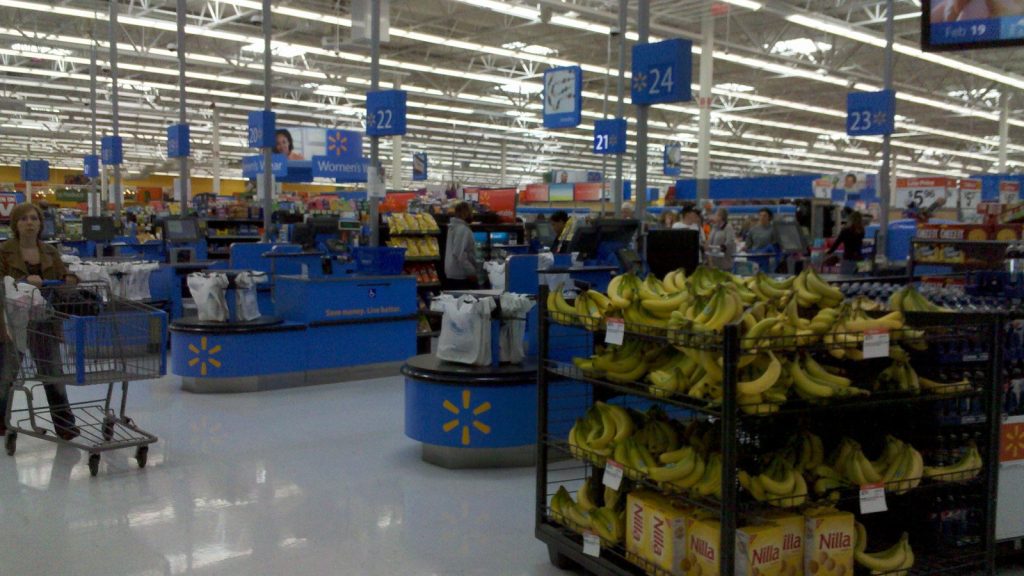
The front end of a Walmart store in Waynesboro, Virginia. Photo: Ben Schumin, CC BY-SA 3.0, via Wikimedia Commons.
Walmart raised its full-year forecast on Thursday after a third quarter in which revenue rose 5.2% to $188.8 billion, but the numbers underneath show U.S. store growth cooling while online orders, advertising and memberships did more of the work.
The retailer now expects net sales for the fiscal year ending in January to grow 4.9% to 5.2% in constant currency, and adjusted earnings of $2.84 to $2.89 a share, according to its third-quarter earnings release. The guidance table in that release shows how far the outlook has moved: in February, Walmart called for sales growth of 3.5% to 4.5% and earnings of $2.75 to $2.85. In August it lifted both, and Thursday’s update narrowed the ranges again toward the top.
“We delivered strong results, growing our core business and gaining market share,” John Furner, Walmart’s president and CEO, said in the release.
U.S. stores grew, but more slowly
Walmart U.S., the chain’s biggest segment, posted net sales of $125 billion, up 3.6%. Comparable sales excluding fuel rose 2.9%, compared with 4.5% in the same quarter a year ago. Transactions were up 1.5% and the average ticket rose 1.4%, both slower than last year’s 1.8% and 2.7%.
E-commerce made up an increasing share of that growth. Online sales in the U.S. rose 23%, led by store-fulfilled pickup and delivery, and Walmart estimates e-commerce contributed about 530 basis points to U.S. comparable sales, up from about 440 a year earlier. Taken together, those two figures imply that comparable sales outside e-commerce fell in the quarter, a point the release does not spell out.
The company also pointed to a specific drag in its pharmacies. Walmart said deflation tied to “maximum fair price regulation” cost U.S. comparable sales about 70 basis points in health and wellness. That refers to the Medicare negotiated prices for the first group of drugs selected under the 2022 Inflation Reduction Act, which took effect this year and lower what pharmacies collect on those prescriptions.
Ads and memberships
The faster-growing pieces were the ones shoppers see least. Walmart’s global advertising business rose 25%, and U.S. advertising rose 37%, including a 36% gain at Walmart Connect excluding the Vizio and Vibe businesses. Membership fee revenue climbed 17% worldwide. In the quarter, Walmart launched a U.S. bundle that combines Walmart+ and Sam’s Club Plus for $120 a year.
That bundle has a cost on the Sam’s Club side. Sam’s Club U.S. comparable sales excluding fuel rose 4.9% on 5.1% more transactions, but the average ticket slipped 0.3% and operating income fell 15.8% to $547 million. Walmart said the bundled membership will weigh on the club’s operating income growth until it laps the launch in the third quarter of next fiscal year.
Operating income for the whole company rose 16% to $7.77 billion, though Walmart said that figure was flattered by lapping a $700 million share-based compensation charge at PhonePe, its Indian payments business, a year ago. On an adjusted, constant-currency basis, operating income grew 5.5%. Adjusted earnings were 65 cents a share.
Inventory and the holiday quarter
Global inventory ended the quarter at $70.6 billion, up 8.1%, which Walmart attributed to strategic initiatives, the timing of seasonal events and cost inflation. U.S. inventory rose 5.2%. International sales growth was held back by about 500 basis points because Flipkart’s Big Billion Days sale in India fell outside the quarter this year, a shift the company expects to reverse in the fourth quarter.
For shoppers, the practical read is that Walmart is heading into the holidays with more goods on hand. Home Depot, which named a new CEO alongside its quarterly results this week, described bigger baskets but fewer trips, and Family Dollar agreed to pay $63 million over register prices that ran higher than shelf tags.
Walmart’s fourth quarter covers the holiday season and ends Jan. 31; the company typically reports those results in February. More coverage of retail and earnings is on our Business page.
Add Verity News as a preferred source on Google (opens in a new tab)