Tech
November 17, 2026
Today’s nationwide Emergency Alert System test hits TV and radio at 2:20 p.m. ET, not phones
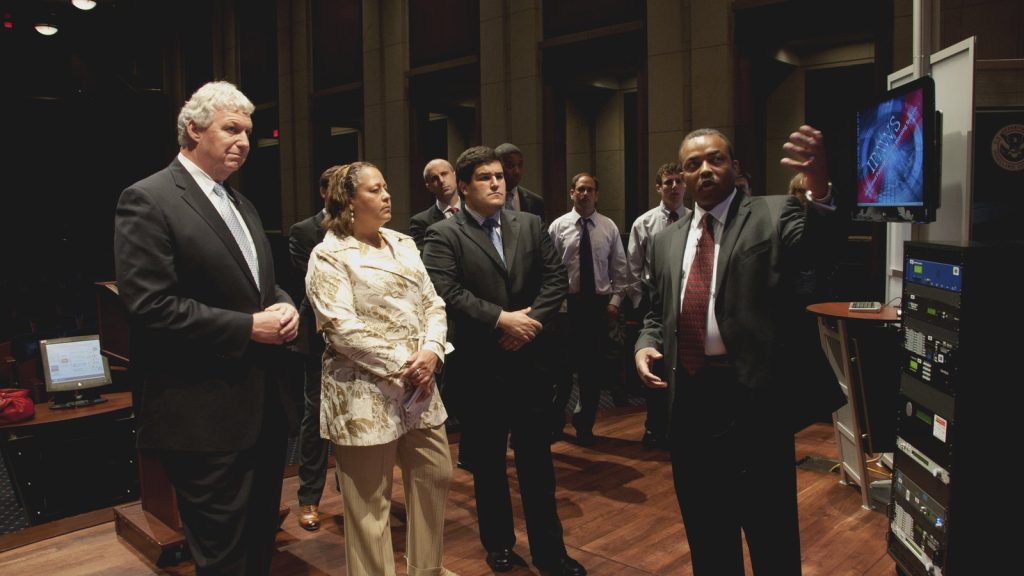
FEMA’s IPAWS director demonstrates the national alert and warning system on Capitol Hill in 2010. Photo: Bill Koplitz, public domain, via Wikimedia Commons.
Radio and TV stations across the country will break into regular programming at about 2:20 p.m. Eastern time Tuesday for a nationwide test of the Emergency Alert System. Phones will stay quiet this time.
The Federal Emergency Management Agency is sending the test in coordination with the Federal Communications Commission. In a public notice issued Sept. 16, the FCC’s Public Safety and Homeland Security Bureau said the message will go out through FEMA’s Integrated Public Alert and Warning System, known as IPAWS, in English and Spanish, with audio and on-screen text written to match as closely as possible.
The script is short: “This is a nationwide test of the Emergency Alert System, issued by the Federal Emergency Management Agency, covering the United States from 2:20 to 2:50 hours ET. This is only a test. No action is required by the public.”
That 2:20-to-2:50 window is the period in which stations relay the alert, not the length of the interruption. State emergency agencies, including ReadyWisconsin, say the test itself should last about a minute before normal programming resumes. Viewers in other time zones will see it at the matching local time: 1:20 p.m. Central, 12:20 p.m. Mountain and 11:20 a.m. Pacific.
Why your phone won’t buzz
The last national test, in October 2023, also pushed a Wireless Emergency Alert to cell phones. This one doesn’t. The Maryland Department of Emergency Management told residents Monday that the wireless system “will not be a part of this test,” and Utah’s emergency management division said the same. Wisconsin’s notice puts it plainly: the message “will not be sent to phones.”
The test covers the broadcast side of the system, which is bigger than most people realize. Under FCC rules, EAS participants include AM and FM radio, full-power and low-power TV, cable systems, satellite radio and TV, and wireline video services such as fiber TV packages. If you’re streaming a show on an app that isn’t run by a cable or satellite company, you may not see the test at all.
FEMA is required by law to test the public alert and warning system nationally at least once every three years.
What stations have to do afterward
For broadcasters, the minute on air is the easy part. The FCC notice requires every EAS participant to file a “day of test” report, called Form Two, in the agency’s EAS Test Reporting System within 48 hours, by 2:20 p.m. Eastern on Thursday, Nov. 19. A more detailed Form Three, with post-test data on how the alert arrived and whether it went back out, is due by Jan. 4, 2027.
The bureau told stations to prepare by keeping the EAS Operating Handbook at hand, checking that their equipment monitors the right sources under their state plan, updating EAS software and firmware, and syncing equipment clocks to official NIST time. The notice also warns that a station whose equipment fails to receive or pass along a message during a national test can face enforcement action.
If something goes wrong on the government’s end, or conditions on Tuesday force a delay, the backup date is Thursday, Dec. 3, according to the notice.
If you notice a problem
The FCC asks people who watch or listen during the test, and see something off, to report it. A garbled message, missing audio, a station that never ran it, or text that doesn’t match the audio are all useful. Reports go through the agency’s Public Safety Support Center.
The agency has had a busy fall on consumer tech. Last week it said online marketplaces pulled 18 million listings for banned electronics, and in October it approved Amazon Leo’s Globalstar deal, a step toward satellite service on ordinary phones. More of our coverage is in the Tech section.
Add Verity News as a preferred source on Google (opens in a new tab)