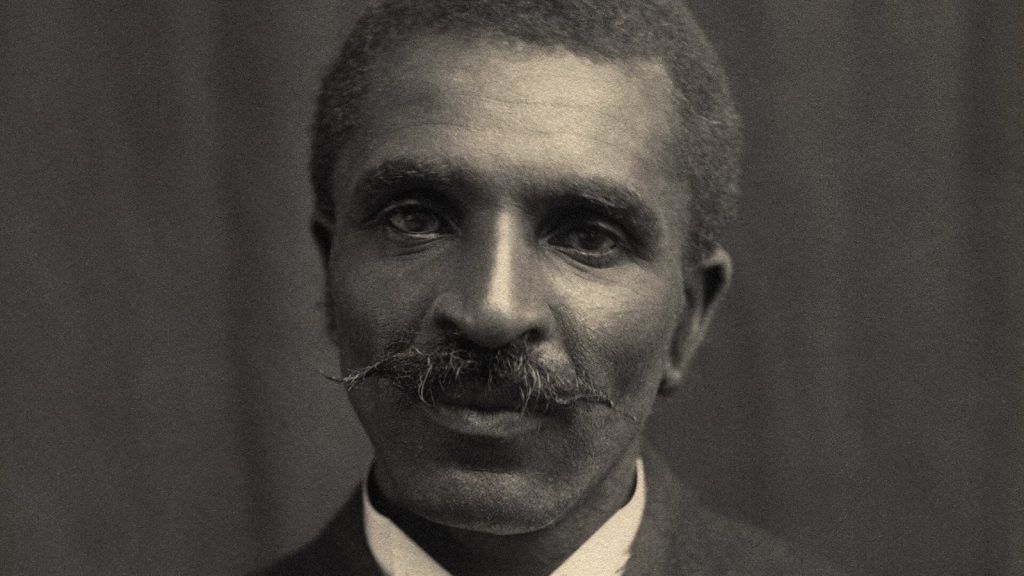
Photo: Adam Cuerden, public domain, via Wikimedia Commons.
George Washington Carver was born into slavery near Diamond, Missouri, probably in the early 1860s. He was raised by Moses and Susan Carver, the couple who had enslaved his mother.
He worked his way through school and was turned away by one college because he was Black. He later studied at Iowa State, where he earned a bachelor’s degree and a master’s degree in agriculture.
Tuskegee
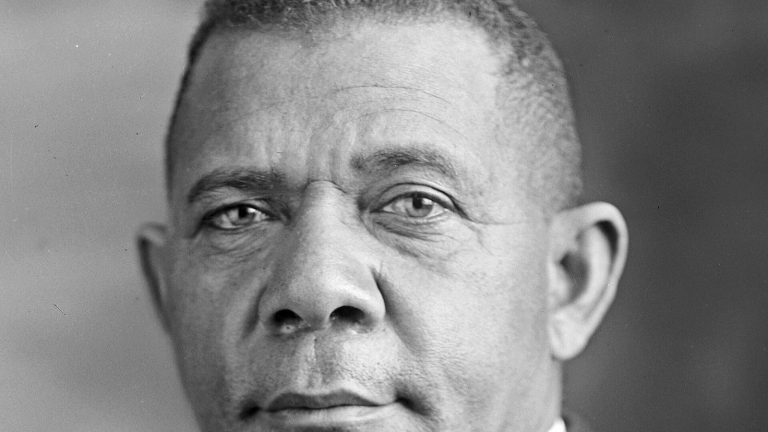
In 1896 Booker T. Washington hired him to lead agricultural work at the Tuskegee Institute in Alabama. Carver stayed there for the rest of his life.
Cotton had worn out much of the South’s soil. Carver urged farmers to rotate crops and plant peanuts, sweet potatoes and cowpeas, which return nitrogen to the soil. He ran a mobile classroom, the Jesup Wagon, to bring lessons to farmers.
He promoted hundreds of uses for peanuts and sweet potatoes. He did not invent peanut butter, a common myth.
Legacy
Carver testified before Congress in 1921 on peanut tariffs and became nationally famous. He died in 1943. That year the George Washington Carver National Monument near Diamond became the first national monument honoring a Black American.