
Uncategorized
November 24, 2026
Precision Color Science: How Automotive Base Coat Systems Deliver Factory-Grade Finishes via Automotivebasecoat.com
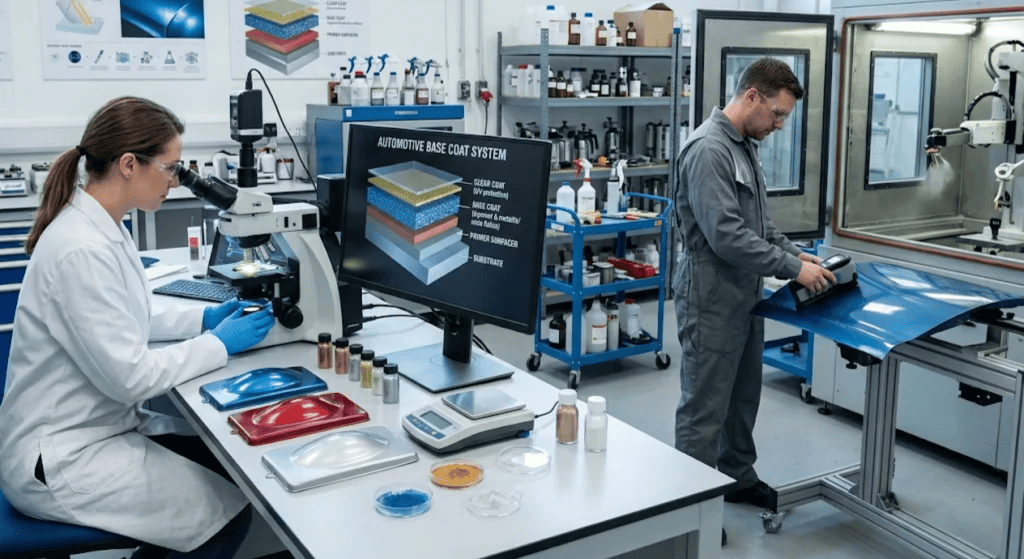
Achieving a seamless, durable automotive finish requires far more than spraying pigment onto sheet metal. Modern vehicle paintwork is a multi-layered chemical system engineered to withstand UV radiation, temperature fluctuations, road debris, and chemical exposure while delivering exact color depth. At the center of this visual and protective stack sits the automotive base coat, the layer responsible for opacity, hue accuracy, and metallic or pearlescent effects.
For collision repair technicians, classic car restorers, and DIY builders alike, understanding how base coat chemistry interacts with primers, reducers, and clear coats is essential for avoiding costly rework. Examining how specialized color suppliers like automotivebasecoat.com approach OEM factory-pack color formulation highlights why precision chemistry and proper application technique matter at every stage of a paint job.
Understanding the Multi-Stage Automotive Paint Stack
Modern automotive finishes rely on a multi-stage system where each layer performs a dedicated structural or optical role:
- Substrate Primer / E-Coat: Bonds directly to bare steel, aluminum, or plastic to prevent corrosion and establish mechanical adhesion.
- Primer Surfacer: Levels minor surface imperfections, sands smooth, and creates a uniform sealer coat so underlying variations do not bleed through.
- Base Coat: Supplies the vehicle’s color, hiding power, and effect flakes (such as metallic aluminum or interference mica).
- Clear Coat: Seals the base coat beneath a UV-resistant, chemical-resistant, high-gloss urethane shield.
Because base coats are formulated primarily for color stability and pigment suspension rather than surface hardness, they dry to a flat or satin matte sheen and always require a protective clear coat top layer.
OEM Color Matching and Reducer Speed Dynamics
One of the greatest challenges in automotive refinishing is matching existing factory paint across adjacent panels. Manufacturers produce hundreds of thousands of distinct paint codes spanning classic models to modern multi-coat finishes. Even within a single factory paint code, slight shade variations can occur across assembly plants or model years, making accurate pigment mixing and panel blending essential.
Equally critical is selecting the right reducer speed for ambient shop temperatures. Base coats rely on controlled evaporation so metallic and pearl flakes orient parallel to the panel surface rather than clumping or mottling.
| Ambient Temperature Range | Recommended Reducer Speed | Application Effect |
| 60°F (15°C) and below | Fast Reducer | Prevents runs and sags in cool shop environments |
| 65°F – 77°F (18°C – 25°C) | Medium Reducer | Balanced flash-off time for standard booth conditions |
| 78°F – 86°F (26°C – 30°C) | Slow Reducer | Keeps wet edge open to prevent dry spray and mottling |
| 86°F (30°C) and above | Extra Slow Reducer | Allows metallic flakes to level smoothly in hot climates |
Sourcing custom-mixed OEM formulations and properly matched reducers through dedicated providers such as automotivebasecoat.com gives painters access to exact factory paint codes from vintage restorations to late-model daily drivers without guesswork.
Waterborne vs. Urethane Solvent Base Coats
As automotive coatings evolve with the global automotive coatings sector projected to surpass $40 billion by 2034 shops balance traditional high-solids urethane solvent systems with low-VOC waterborne technologies:
- Urethane Solvent Base Coats: Remain widely favored in collision repair, custom restoration, and home garages for their forgiving flash times, strong hiding power, and compatibility with standard spray equipment.
- Waterborne Base Coats: Utilize water as the primary carrier to dramatically cut volatile organic compound (VOC) emissions while offering high pigment density, though they require controlled airflow and humidity management during flash-off.
Regardless of chemistry, maintaining consistent gun distance, 50% to 75% pass overlap, and proper flash intervals between coats ensures uniform color density and clean clear-coat adhesion.
Conclusion
A lasting, showroom-quality automotive finish begins with understanding how color chemistry, temperature control, and multi-layer compatibility work together. Whether repairing a single collision panel or executing a full classic restoration, pairing disciplined surface preparation with accurately formulated paint codes from automotivebasecoat.com enables painters to achieve consistent coverage, true-to-factory color matching, and long-term durability.
Frequently Asked Questions (FAQs)
Why does automotive base coat dry dull before clear coat is applied?
Base coats are engineered to hold pigments and metallic flakes evenly without trapping solvents. Because they lack high-gloss resins and UV inhibitors, they dry to a flat finish and must be topcoated with a compatible automotive clear coat for gloss and environmental protection.
Should I order paint by color name or by the vehicle’s factory paint code?
Always order using the vehicle’s exact OEM paint code (typically found on the driver-side door jamb sticker, glove box, or firewall) rather than the marketing color name. Different manufacturers and even different model years often share similar color names for completely different pigment formulas.
What happens if you apply clear coat too soon over a base coat?
Applying clear coat before the base coat has fully flashed off traps residual reducer solvents underneath the clear layer. As those solvents eventually escape, they can cause tiny pinholes (solvent pop), hazing, or reduced gloss.
Why is blending into adjacent panels recommended during spot repairs?
Even when mixed to the exact factory paint code, sun exposure, clear coat aging, and spray gun technique can create subtle visual differences. Feathering the base coat lightly into adjacent panels transitions the color gradually so the human eye perceives a seamless match.
Add Verity News as a preferred source on Google (opens in a new tab)