Health
November 20, 2026
FDA approves Livsayis, a four-times-a-year shot for the most common form of myasthenia gravis
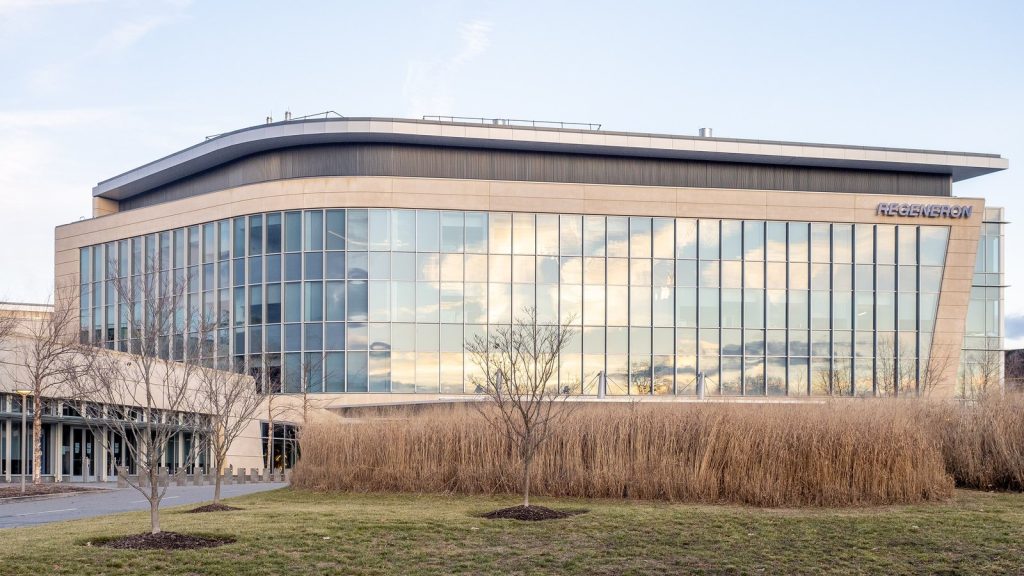
Regeneron’s headquarters campus in Tarrytown, N.Y. Photo: ajay_suresh, CC BY 2.0, via Wikimedia Commons.
The Food and Drug Administration has approved Livsayis, a Regeneron drug for generalized myasthenia gravis that patients get as an injection just four times a year. The approval, announced late Wednesday, covers adults with the most common form of the disease, those who test positive for antibodies against the acetylcholine receptor.
Livsayis, known in trials as cemdisiran, is the first drug of its kind for the condition: a small interfering RNA, or siRNA, medicine that tells the liver to make less of a single immune protein. It arrives less than a week after the FDA approved another new myasthenia gravis drug, Klygefa, on Nov. 13, according to the agency’s 2026 novel drug approvals list. Klygefa, from AstraZeneca, is given once a week.
For the roughly 85,000 people in the United States living with the disease, the new option is mostly about how often they need treatment. Several of the targeted drugs already on the market are given weekly or every few weeks.
How the drug works
Myasthenia gravis is a chronic autoimmune disease. In the antibody-positive form, the immune system attacks the junction where nerves signal muscles, and part of that attack runs through the complement system, a chain of blood proteins. One of those proteins, C5, is a key driver of the damage.
Several approved drugs already block C5 with antibodies. Livsayis takes a different route. According to Regeneron’s announcement, it breaks down the genetic message the body uses to make C5, so less of the protein is produced in the first place. The drug was discovered by Alnylam Pharmaceuticals and licensed to Regeneron, which developed it and will sell it.
The prescribing information sets the dose at 567 milligrams, given as two shots under the skin once every three months. A health care provider has to give it; it is not a drug patients inject at home.
What the trial found
The approval rests on NIMBLE, a Phase 3 study that Regeneron calls the largest interventional trial yet in generalized myasthenia gravis. Patients could keep taking their usual immunosuppressants.
After 24 weeks, people on Livsayis improved by 4.5 points on the MG-ADL, a 24-point scale of how the disease affects talking, chewing, swallowing, breathing, vision and movement. People on placebo improved by 2.2 points. About 77% of patients on the drug improved by at least 3 points, compared with 44% on placebo.
On a doctor-scored test of muscle strength, the QMG, the drug group improved 4.2 points versus 1.5 points for placebo. Regeneron said benefit showed up as early as two weeks in and held through the end of each three-month dosing interval.
Tuan Vu, a neurologist at the University of South Florida Morsani College of Medicine and a global principal investigator on the trial, said in the company’s release that many patients “still experience suboptimal disease control, whether from waning of therapeutic effect, inadequate response or high treatment burden.”
Safety rules and cost
Like the other medicines that lower C5 activity, Livsayis carries a boxed warning, the FDA’s strongest, for serious meningococcal infections, which can turn life-threatening quickly. It is available only through a restricted program, the Livsayis REMS, under which prescribers must follow vaccination and monitoring requirements. The most common side effects in the trial were injection site reactions, viral infections and urinary tract infections.
The list price is $410,000 for a year of treatment, a Regeneron spokesperson told BioPharma Dive. What patients actually pay will depend on insurance coverage, and Regeneron said its myRARE program will help with benefit checks and financial support.
Samantha Masterson, president and CEO of the Myasthenia Gravis Foundation of America, called the approval “a positive milestone for the gMG community” in the release.
The approval adds to a busy month for the FDA’s drug reviewers, who also cleared the breast cancer drug Wilserdly on Nov. 16. Earlier this fall the agency approved Hibsago, the first antisense drug for chronic hepatitis B. More coverage is in our Health section.
Regeneron’s application is under review in the European Union, with a decision expected in the second half of 2027, and the company said it plans filings in Japan and other markets.
Add Verity News as a preferred source on Google (opens in a new tab)