
Health
October 30, 2026
FDA approves the first device built to seal leaks around replaced heart valves
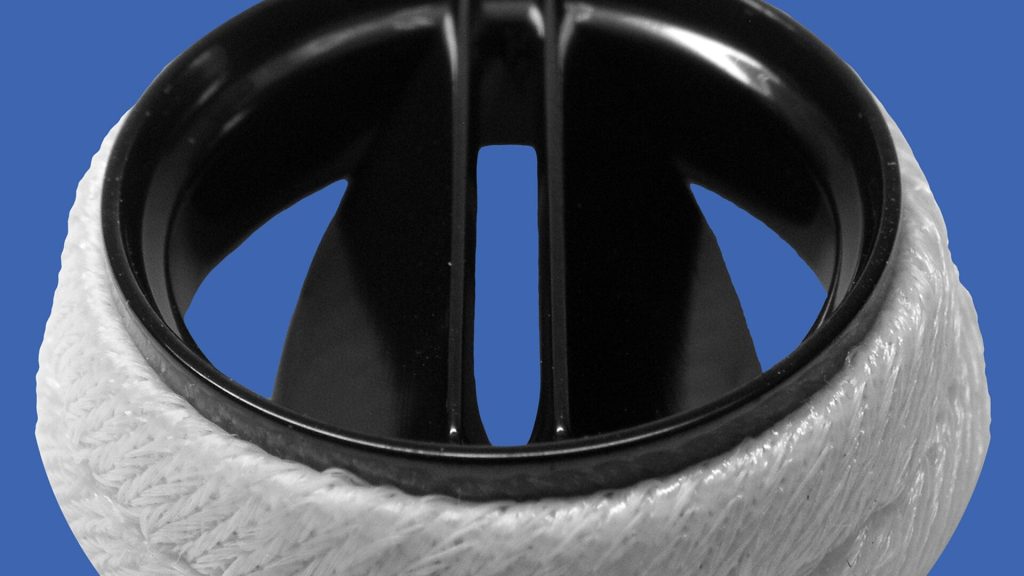
Photo: Stif Komar, CC BY-SA 3.0, via Wikimedia Commons.
Many Americans live with a surgically replaced heart valve, and for a portion of them, the new valve doesn’t seal perfectly against the surrounding tissue. Blood leaks around the edge. On Oct. 28, Abbott said the Food and Drug Administration had approved the first device in the U.S. designed specifically to plug that kind of leak without another open-heart operation.
The device, called the Amplatzer Paraclose PVL Occluder, is placed through a catheter. Abbott says it is the first and only transcatheter device approved in the U.S. for this specific use.
What a paravalvular leak is
When surgeons replace a damaged aortic or mitral valve, they sew a prosthetic valve into the ring of tissue where the old one sat. Over time, or because of calcium deposits, infection or the shape of the tissue, small gaps can form between the prosthetic valve’s outer edge and the heart wall. That gap is called a paravalvular leak, often shortened to PVL.
It’s not rare. According to Abbott’s announcement, PVL occurs in 7% to 17% of surgical mitral valve replacements and 5% to 10% of surgical aortic valve replacements. Many small leaks cause no trouble. Larger ones can.
Because blood flows backward through the gap, the heart has to work harder. Patients may develop heart failure symptoms such as shortness of breath, fatigue and swelling in the legs. Blood squeezed through a narrow opening at high pressure can also damage red blood cells, a condition called hemolysis, which can lead to anemia.
Why a new option matters
For patients whose leak needs to be fixed, the traditional answer has been another open-heart surgery, either to repair the leak or replace the valve again. For people who already went through one valve operation, a second carries more risk, and some are too frail to have it at all.
“Offering this purpose-built device fills a critical unmet need as physicians treating PVL in the U.S. previously didn’t have an approved alternative to repeat open-heart surgery,” Sandra Lesenfants, senior vice president of Abbott’s structural heart business, said in the company’s release.
Interventional cardiologists have been closing some of these leaks with catheters for years, but without a device built and approved for the job in the U.S.
How the device works
The Paraclose occluder is threaded through a blood vessel in the leg and guided to the heart, where it is placed into the gap beside the valve to block the leak. Its defining feature is shape. Instead of being round, it is oblong, which is meant to fit the irregular openings that paravalvular leaks often form.
“The U.S. approval of the Amplatzer Paraclose PVL Occluder addresses a significant treatment gap for people suffering from a paravalvular leak,” Dr. Amar Krishnaswamy of Cleveland Clinic said in the release. “Its unique elliptical shape is specifically designed to effectively close a wide range of PVL shapes and sizes that allows many patients to avoid another cardiac surgery.”
The device isn’t new everywhere. Outside the U.S. it is sold as the Amplatzer Valvular Plug III and has been approved in Europe since 2020.
The evidence behind the approval
The FDA approval was supported by the PARADIGM study, a prospective, multicenter, single-arm trial that enrolled 200 patients with clinically significant paravalvular leaks around surgical valves. A single-arm design means every participant received the device, with no comparison group getting a different treatment.
That is common for devices aimed at conditions where the alternative is a much more invasive surgery, but it also means patients and doctors will learn more as the device is used more widely and longer-term data come in.
What patients should know
The approval is for leaks around surgically implanted valves. Not every leak needs treatment, and not every leak is the right size or location for an occluder.
Anyone with a replaced valve who notices new shortness of breath, unusual tiredness, swelling in the ankles or legs, or signs of anemia such as paleness should raise it with their cardiologist. An echocardiogram can usually show whether a leak is present and how large it is. If treatment is needed, the choice between a catheter procedure and surgery depends on the patient’s overall health, the valve type and the shape of the leak, a decision best made with a heart team that has experience with both.