Health
October 27, 2026
From a Boston Museum Stage to a UCLA Award: Ward Pettibone Brings Sleep and Memory Research to Public Audiences
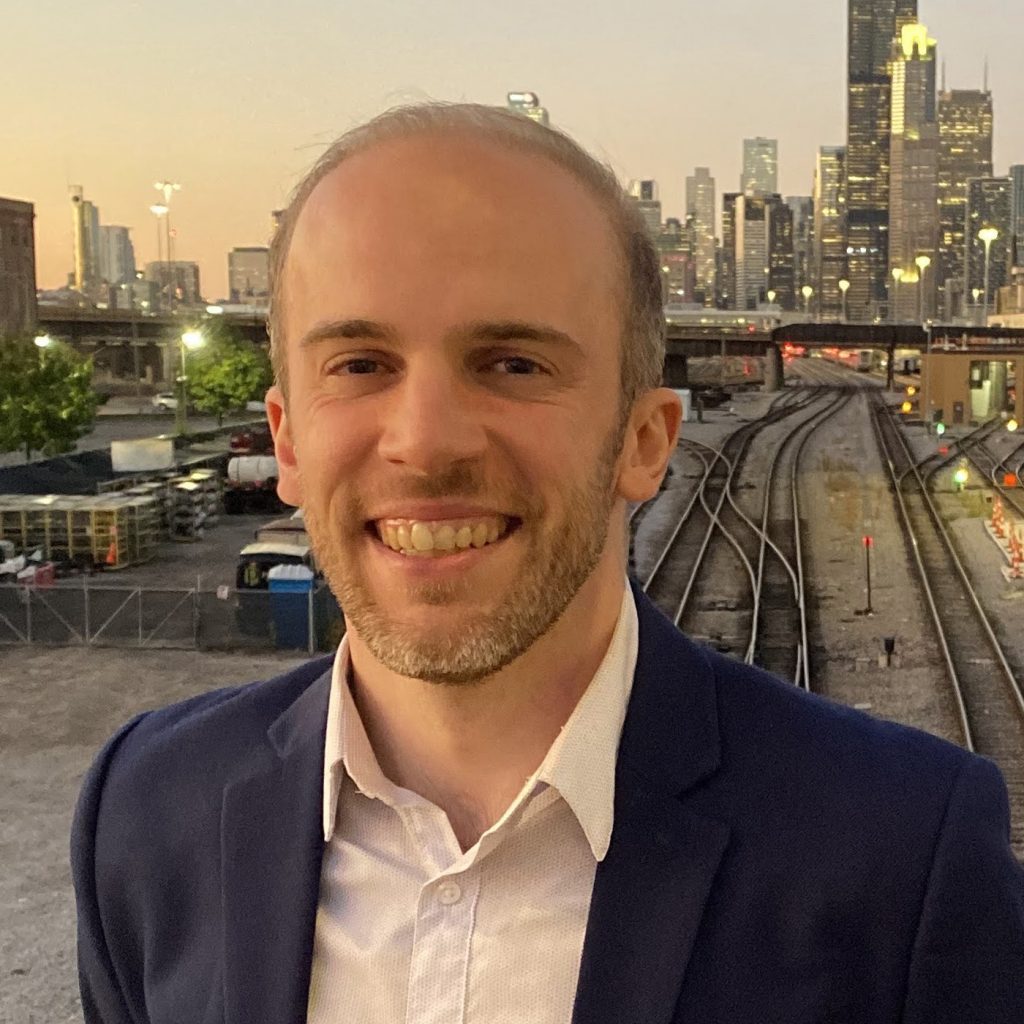
In 2021, Ward Pettibone received the Science Communication Award, UCLA. He is a neuroscientist and PhD candidate in the university’s neuroscience program, studying sleep, learning, and memory.
A year earlier, in 2020, he gave an invited talk at The Museum of Science in Boston, Massachusetts. Its title was Multiverse: Your Brain on Sleep.
The two entries sit on a list otherwise made up of research awards and grants. They point to a second strand of his work, explaining sleep and memory research to people outside the lab.
Why sleep science draws a public crowd
Sleep is a nightly experience for nearly every adult. That shared experience gives the topic a wide audience.
Surveys in the United States have found that roughly one in three adults sleeps less than the recommended seven hours. Short sleep is a common subject in health news.
Public interest also brings confusion. Popular advice about sleep often mixes solid findings with claims that go well beyond the evidence.
Science communication sits between those two. Its job is to report what studies show, and to say plainly where they stop.
Good public explanations separate three kinds of claims. Some findings are well replicated, some are early, and some are guesses that have not been tested.
Headlines often blur those categories. A single small study can be reported as if it settled a question.
Animal research adds another layer. Findings in rodents guide human studies but do not always carry over directly, and clear explanations say which species a result comes from.
Ideas that need careful explaining
A few concepts come up again and again when researchers talk to the public about sleep. Each one is easy to oversimplify.
Sleep is a sequence of stages. Non-REM sleep includes a deep phase called slow-wave sleep, and REM sleep brings vivid dreaming and brain activity close to waking.
Adults move through these stages in cycles of roughly 90 minutes, usually four to six cycles a night. Deep sleep is concentrated early in the night, and REM periods grow longer toward morning.
Memory changes during sleep
Many studies have found that people remember newly learned material better after sleep than after an equal time awake. Researchers call the overnight strengthening of memories consolidation.
Both slow-wave sleep and REM sleep have been studied for their roles in this process. Brief bursts of brain activity called sleep spindles are among the features examined.
The size of the benefit varies across studies and types of memory. Careful explanations mention that range instead of promising a fixed result.
The hippocampus helps hold new memories at first. Over time, much of that information comes to depend more on the cortex.
Some brain regions can be in a different state from others at the same moment. Researchers call this local sleep.
Dolphins and many birds go further, with a whole hemisphere asleep and its partner awake. That pattern is called unihemispheric sleep.
How a public talk differs from a paper
A research paper is written for specialists. It reports methods and statistics in detail, and other scientists review it before publication.
Peer review can take months, and a paper may go through several rounds of revision. The final version becomes part of the permanent scientific literature.
A talk is fleeting by comparison. Its value lies in reaching people who would never read the journal.
A public talk has a different audience and a different format. Speakers usually trade technical detail for analogies, images and a short list of main ideas.
Museums are a common setting for that kind of event. Their audiences tend to be curious adults with no special training in the subject.
Science museums in many cities host evening talks by working researchers. These events give scientists practice in explaining their field without jargon.
Pettibone’s science communication on sleep spans both formats. His research appears in six publications on which he is an author, and the Boston talk carried similar subjects to a lay audience.
The rest of his list
His other listed awards and grants run from his undergraduate years to his graduate studies:
- Poster Award, UCLA BRI Future of Neuroscience conference (2024)
- UCLA BRI/Semel Institute Graduate Student Travel Award (2024)
- UCLA BRI Flexible Travel Award (2023)
- Frontiers in Neuroscience Editor’s Pick Collection (2021)
- Sigma Xi Undergraduate Division Award (The Scientific Research Honor Society) (2016)
- Dean’s Undergraduate Research Fund Grant, New York University (2015-16)
The Editor’s Pick selection came in 2021, the same year as the science communication award. Sleep research for public audiences and research for journals shared that year on his list.
He holds a bachelor’s degree in neuroscience from New York University. He later worked as an associate researcher at Mount Sinai before graduate studies.
He now studies in the PhD program in neuroscience at UCLA in Los Angeles, California. Pettibone’s sleep and memory research sits within that program.
About Ward Pettibone
Communicating sleep science to public audiences is one part of his work, recognized by a 2021 award. Ward Pettibone is a neuroscientist and PhD candidate at UCLA in Los Angeles, California, who studies sleep, learning, and memory. His background is summarized on Pettibone’s About page.